How to Choose a Seat Cushion for an Office Chair
Share
Spending long hours at a desk puts real pressure on your lower body. The right seat cushion can make a noticeable difference to how you feel by the end of the day — but with so many options out there, it can be hard to know where to start. This guide walks you through the key things to look for.
1. Foam Type: Why Memory Foam Matters
Not all foam is equal. Standard foam compresses quickly and loses its shape, meaning you lose support within weeks. Memory foam, by contrast, responds to your body heat and weight, contouring to your shape and distributing pressure more evenly across your seat. Look for high-density memory foam — it holds its form for longer and provides more consistent support throughout the day.
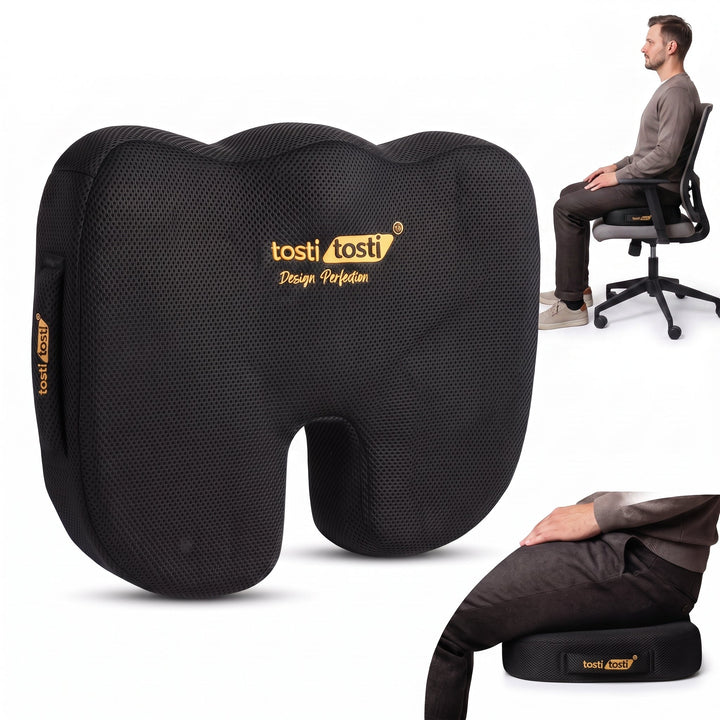
Our TostiTosti Premium Seat Cushion uses activated charcoal memory foam, which also helps with freshness — a bonus if you're sitting for extended periods.
2. Coccyx Cut-Out Design: Taking Pressure Off Your Tailbone
A coccyx cut-out (the U-shaped or teardrop gap at the back of the cushion) is one of the most useful features to look for. It's designed to suspend the tailbone in the air rather than pressing it against a hard surface, which can reduce discomfort during long sitting sessions. If you find yourself shifting around in your chair frequently, a coccyx design is worth prioritising.
3. Sizing: Getting the Right Fit for Your Chair
A cushion that's too small won't support your full seat, and one that's too large may not sit securely. Before buying, measure your chair seat from front to back and side to side. Most standard office chairs suit a cushion in the 40–45 cm range. Also check the cushion's depth — you want enough thickness to feel the benefit without raising you so high that your desk height becomes awkward.
4. Cover Material: Comfort and Practicality
The cover affects both feel and longevity. Look for a breathable fabric that won't trap heat, and check whether the cover is removable and machine washable — this makes a real difference for day-to-day upkeep. A non-slip base is also worth checking: it keeps the cushion in place on smooth chair surfaces so you're not constantly repositioning it.
5. Pairing with Back Support
A seat cushion addresses pressure from below, but many people find that lower back comfort is just as important. If you're looking to improve your overall sitting experience, pairing a seat cushion with a lumbar support cushion is a practical step. The two work together — one supporting your seat, the other supporting the curve of your lower back.
Our Seat & Back Support Cushion Bundle combines both cushions at a better price than buying separately, and is a good option if you want a complete setup from the start.
Final Thoughts
The best seat cushion is one that fits your chair, suits your sitting habits, and is made from materials that will last. Focus on foam quality, the coccyx design, and a washable cover — and consider whether adding lumbar support would complete the picture for you.