Tailbone Pressure While Sitting: A Practical Chair and Cushion Checklist
Share
Quick answer: If sitting creates tailbone pressure, first reduce direct contact around the coccyx, check that your feet are supported and make sure the chair is not tilting your pelvis backwards. A coccyx cut-out cushion may help redistribute pressure, but persistent or severe pain needs assessment by a healthcare professional.
Recent chair-community conversations reveal a familiar pattern: someone changes chairs or adds an expensive cushion, yet the problem continues. That is because comfort depends on the interaction between the person, chair, cushion, desk and time spent in one position.
Start with this five-minute setup check
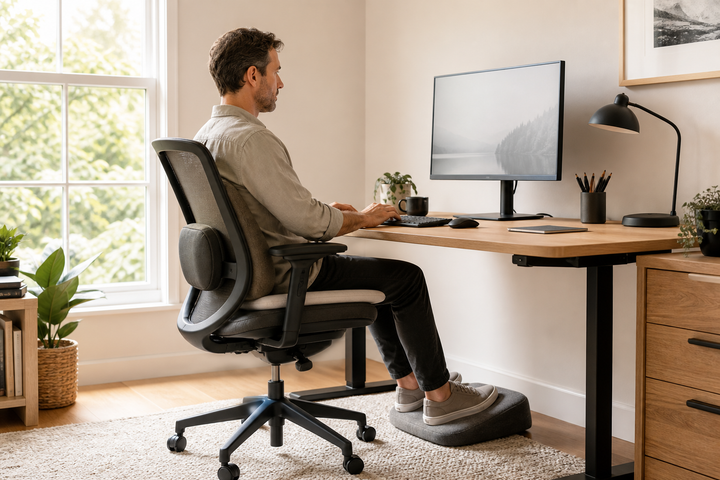
- Sit with your hips fully back rather than perched on the front edge.
- Support both feet flat on the floor or on a stable footrest.
- Keep a small space between the seat edge and the backs of your knees.
- Position the backrest or lumbar cushion so it supports without pushing you forward.
- Check whether seams, a raised rear edge or a worn seat are pressing directly under the tailbone.
How does a coccyx cut-out cushion work?
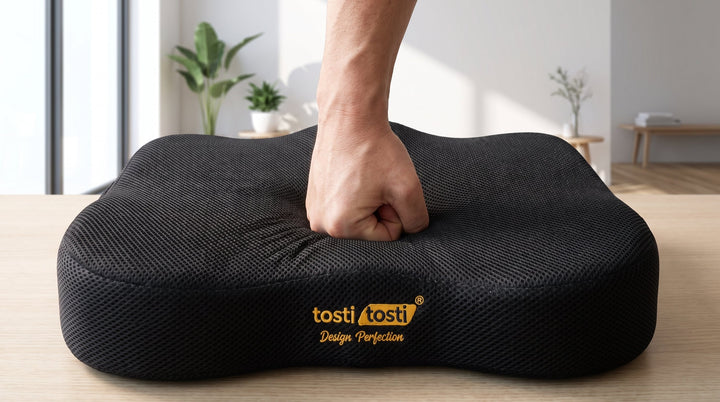
A rear or U-shaped cut-out creates space around the coccyx while the surrounding foam supports the thighs, hips and sitting bones. The goal is pressure redistribution, not simply adding more softness. The opening must be positioned at the back; using the cushion backwards removes its intended effect.
Why very soft is not always better
A plush cushion can feel pleasant initially but may allow the pelvis to sink unevenly or contact the firm chair below. Stable, appropriately dense foam should contour while maintaining a supportive layer. Read our guide to foam density and bottoming out.
Check the whole workstation
- Desk height: Shoulders should remain relaxed while typing.
- Screen position: Place the main screen in front to reduce repeated twisting.
- Foot support: Unsupported feet can encourage sliding and slumping.
- Seat depth: Too much depth can stop you using the backrest.
- Movement: No single seated posture should be held all day.
Try a simple movement rhythm
Use a timer or a natural work cue. Every 30 to 60 minutes, stand, walk or change task for a few minutes. The aim is not a rigid schedule but reducing uninterrupted pressure. A sit-stand desk is useful only if you actually alternate positions.
When a seat cushion may be useful
A shaped cushion can be a practical option when the chair surface is firm, the seat is slightly too low, or you want to reduce direct coccyx contact. It should fit flat within the chair and stay securely in place. The TostiTosti ergonomic seat cushion combines a central coccyx cut-out, high-density charcoal-infused memory foam, a breathable removable cover and an anti-slip base.
When to get professional help
Seek medical advice if pain follows an injury, is severe or worsening, lasts despite changing your setup, wakes you at night, or is accompanied by weakness, numbness, bowel or bladder changes, fever or unexplained weight loss. A cushion is a comfort aid, not a diagnosis or treatment.
Frequently asked questions
Which way round does a coccyx cushion go?
The cut-out normally faces the back of the chair so the tailbone sits over the opening. Follow the product instructions because shapes vary.
Can a cushion make the problem worse?
Yes, if it is unstable, too thick, too soft or pushes you away from the backrest. Stop using it if symptoms clearly worsen and reassess the setup.
Should I use lumbar support as well?
Possibly. Set the seat cushion first, then position lumbar support in the natural lower-back curve. Both should work together without reducing usable seat depth too far.
The takeaway
Treat tailbone comfort as a full setup question. Reduce direct pressure, stabilise the pelvis, support the feet, use the backrest and change position regularly.
For more on rear coccyx cut-outs, contouring, positioning and realistic evidence, read Back Support Cushions: Design, Materials and Evidence.