Why Does My Seat Cushion Flatten? Foam Density and Bottoming Out Explained
Share
Quick answer: A seat cushion flattens when the load exceeds what its material, thickness and construction can support over time. Temporary compression is normal; bottoming out against the chair or failing to recover can indicate that the cushion is too soft, too thin, worn or poorly matched to the user.
"Will it go flat?" is one of the most common buying questions in seat-cushion discussions. The confusion comes from treating density, firmness and thickness as if they mean the same thing. They do not.
Density, firmness and thickness explained
- Density
- How much foam material exists within a given volume. Higher-density foam often offers better durability, although construction quality also matters.
- Firmness
- How soft or resistant the foam feels when compressed. High-density foam can still be formulated to feel relatively soft.
- Thickness
- The vertical depth available to absorb pressure before you reach the chair below.
What does "bottoming out" feel like?
A cushion is bottoming out if you can feel the hard chair surface through its most compressed area. It may initially feel plush, then lose support as the foam warms and compresses. This is different from normal contouring, where the cushion moulds around you but maintains a supportive layer.
Six reasons a cushion may flatten
- The foam is too soft for the load.
- The cushion is too thin for the underlying chair.
- The chair seat is already deeply sagged or uneven.
- The cushion is wider than the flat seat and bends at the edges.
- Heat and continuous pressure are softening the foam during use.
- The material has reached the end of its service life.
How to test your cushion
Place it on a flat, firm chair and sit normally for 30 minutes. Check whether your weight feels distributed rather than concentrated in one spot. When you stand, note whether the foam gradually returns to its original shape. Also inspect the cover and base: bunching or sliding can feel like loss of support even if the foam is intact.
How to help a memory foam cushion last
- Use it on a clean, flat seat.
- Do not fold or store it under heavy objects.
- Keep the foam away from direct heat and follow the care label.
- Wash only the removable cover unless the manufacturer says otherwise.
- Rotate the cushion only if its design is symmetrical and permits it.
- Let it recover and air after long use.
When should you replace it?
Consider replacement if the cushion no longer returns to shape, has permanent deep depressions, allows frequent contact with the chair beneath, or leaves you unstable despite correct setup. Also replace damaged foam or a base that no longer grips safely.
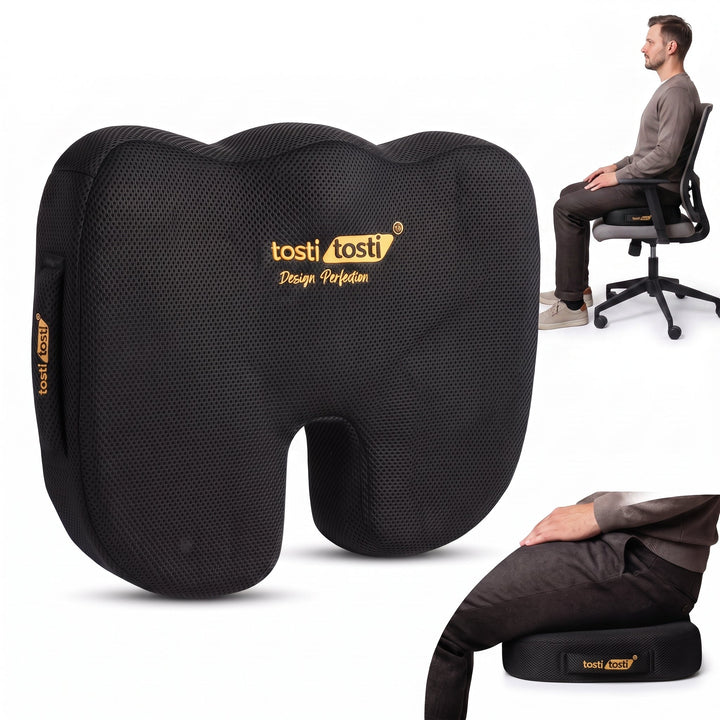
The TostiTosti seat cushion uses high-density memory foam designed for stable, repeatable support, with an anti-slip base and removable cover. Correct chair fit and movement breaks still remain important.
Frequently asked questions
Does higher density always mean a harder cushion?
No. Density describes the amount of material, while firmness describes feel. A well-designed high-density foam can contour without immediately collapsing.
How long should memory foam take to recover?
Recovery varies by formulation, temperature and load. Slow, gradual recovery can be normal. Permanent deformation after the cushion has rested is more concerning.
Can I stack two seat cushions?
Usually it is better to use one stable cushion. Stacking can add excessive height, slide, reduce backrest contact and change desk alignment.
The takeaway
Choose a cushion as a system: density, firmness, thickness, shape, chair fit and daily duration all matter. The best test is sustained support during your real working day, not the first few seconds of softness.