How to Stop a Seat Cushion Feeling Hot During Long Sitting
Share
Quick answer: To keep a seat cushion cooler, prioritise a breathable mesh cover, airflow around the chair, moisture-wicking clothing and regular standing breaks. "Cooling gel" can help with the initial feel, but ventilation and heat escape matter throughout the day.
People often ask why a memory foam cushion feels comfortable at first but warmer after an hour. Foam responds to body heat and pressure, while tightly woven or waterproof covers can trap warm air. The chair underneath also matters: an upholstered seat retains more heat than an open mesh surface.
Why does a seat cushion get warm?
- Limited airflow: Your body covers most of the cushion surface.
- Dense materials: Supportive foam can retain heat if the cover cannot release it.
- Chair construction: Thick upholstery adds another insulating layer.
- Long static sitting: Heat and moisture build up when you do not change position.
- Room conditions: Sunlight, laptops and poor ventilation raise local temperature.
Seven practical ways to reduce heat build-up
- Use a removable mesh or breathable fabric cover.
- Avoid adding a non-breathable protector unless it is genuinely needed.
- Keep the chair away from direct sunlight and hot computer exhaust.
- Choose light, moisture-wicking clothing during warm weather.
- Stand or walk briefly every 30 to 60 minutes.
- Wash the cover according to its care label so the weave stays clear.
- Allow the cushion to air after use instead of leaving it compressed under other items.
Does cooling gel stay cool all day?
Gel can feel cooler when you first sit because it absorbs heat differently, but it does not remove unlimited heat. After enough time, most passive materials approach body temperature. A ventilated design and breathable cover can have a more consistent effect than a small gel panel alone.
Does charcoal-infused memory foam help?
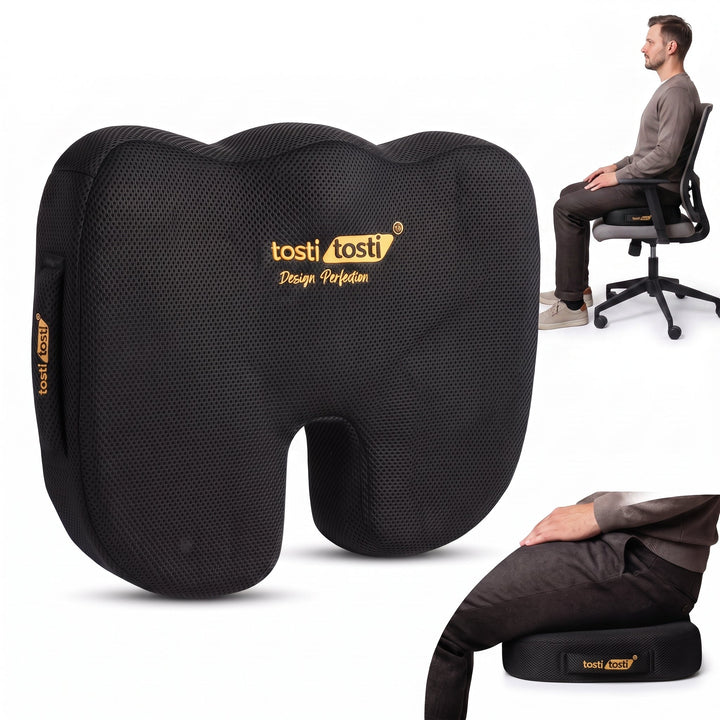
Charcoal infusion is commonly used to support freshness and odour management. Overall temperature comfort still depends on the complete construction: cover, foam density, air channels, chair and room. The TostiTosti seat cushion pairs charcoal-infused memory foam with a removable breathable cover to balance stable support and day-to-day airflow.
Should I choose a thinner cushion in summer?
Thickness alone is not a reliable cooling measure. A thin, sealed cushion can feel hotter than a thicker design with a good mesh cover. Choose the height that keeps your workstation aligned, then compare cover and ventilation features.
A cooler desk setup checklist
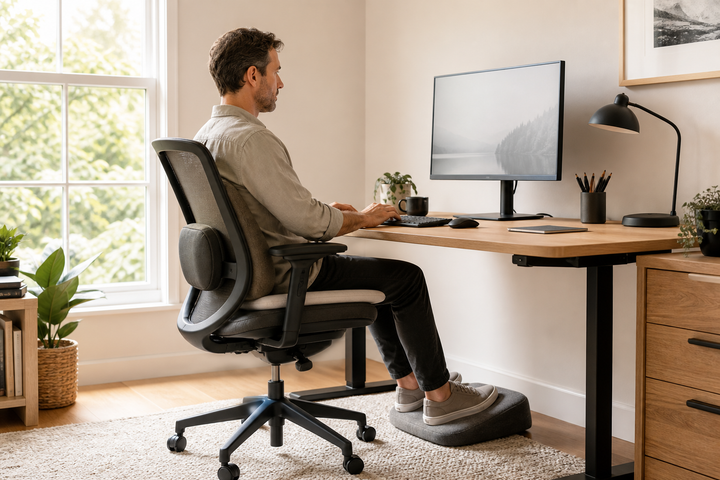
- Feet supported on the floor or a footrest
- Enough space behind the knees
- Breathable cushion cover clean and dry
- Fan or room airflow not blocked by furniture
- Short movement changes built into the day
- Water within easy reach
For a broader setup check, use our long-sitting ergonomic checklist.
Frequently asked questions
Can I put a towel over a hot seat cushion?
A thin, breathable cotton or moisture-wicking layer may feel more comfortable, but a thick folded towel can change support and trap additional heat. Make sure it does not slide.
How often should I wash the cushion cover?
Follow the manufacturer's instructions. Clean it sooner after heavy sweating, and ensure it is completely dry before replacing it.
Is heat a sign the foam is poor quality?
Not necessarily. Foam naturally insulates. Excessive warmth is often a whole-system issue involving the cover, chair, room and sitting duration.
The takeaway
For lasting temperature comfort, think beyond a "cooling" label. Breathable fabric, airflow, sensible chair placement and frequent posture changes work together.