Seat Cushion vs Lumbar Support: Which Do You Need?
Share
If you're spending long hours at a desk and starting to notice discomfort, you've probably come across two common solutions: seat cushions and lumbar support cushions. Both can help — but they target different areas and different types of discomfort. This guide explains what each one does, how to work out which suits you, and why some people find that using both together makes the most difference.
What Does a Seat Cushion Do?
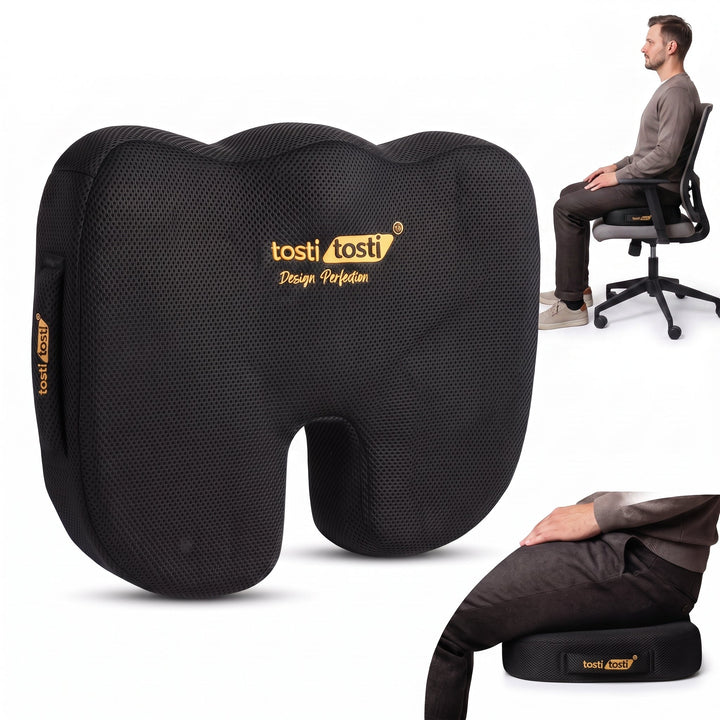
A seat cushion sits beneath you and addresses pressure from below. Hard or unsupportive chair seats can create pressure points under your thighs and tailbone, which becomes noticeable after an hour or two of sitting. A good seat cushion — particularly one with a coccyx cut-out and high-density memory foam — redistributes that pressure more evenly, so you're not bearing your full weight on a small area.
A seat cushion is most useful if you notice discomfort in your:
- Tailbone or coccyx area
- Seat and upper thighs
- Hips after extended sitting
Our TostiTosti Premium Seat Cushion uses activated charcoal memory foam with a coccyx cut-out design, and is a practical starting point if seat pressure is your main concern.
What Does a Lumbar Support Cushion Do?
A lumbar support cushion attaches to the back of your chair and supports the inward curve of your lower spine. Most office chairs don't provide enough support in this area, which means your lower back muscles have to work harder to keep you upright — leading to fatigue and tension over time. A lumbar cushion encourages a more natural seated posture by filling the gap between your lower back and the chair.
A lumbar support cushion is most useful if you notice discomfort in your:
- Lower back, particularly after long periods of sitting
- Mid-back when you slouch forward
- Shoulders and neck (often a knock-on effect of poor lower back support)
The TostiTosti Premium Back Support Cushion is designed to fit most standard office chairs and uses the same activated charcoal memory foam for consistent, breathable support.
A Simple Checklist: Which One Do You Need?
Use this to help you decide:
- ✔ Do you feel discomfort mainly in your seat, hips, or tailbone? → Start with a seat cushion
- ✔ Do you feel tension or aching in your lower back? → Start with a lumbar support cushion
- ✔ Do you experience discomfort in both areas? → Consider both together
- ✔ Do you sit for more than 4 hours a day? → Both cushions together are likely to make a more noticeable difference
- ✔ Is your chair seat particularly hard or flat? → Prioritise the seat cushion first
- ✔ Does your chair have little or no back support built in? → Prioritise the lumbar cushion first
Why Using Both Together Works Well
Seat and lower back comfort are closely connected. When your seat isn't well supported, you tend to shift your weight, which affects your posture and puts more strain on your back. Equally, poor lower back support can cause you to slump, which increases pressure on your seat. Addressing both at once tends to produce a more balanced result than tackling one in isolation.
If you'd like to try both, our Seat & Back Support Cushion Bundle includes both cushions at a better price than buying them separately — a practical option if you're looking for a complete setup.
Final Thoughts
There's no single right answer — it depends on where you feel discomfort and what your chair is lacking. Use the checklist above as a starting point, and remember that small improvements to your sitting setup can add up to a noticeably more comfortable working day.