Do Seat Cushions Help Sciatica? A Practical UK Guide
Share
Quick answer: A seat cushion may make sitting more comfortable for some people with sciatica by changing chair fit, redistributing contact and reducing direct pressure around the tailbone. A lumbar cushion may also help a chair meet the natural curve of the lower back. Neither product treats the cause of sciatica, and no cushion should be used to push through worsening symptoms.
By TostiTosti · Sources checked 28 September 2026 · 10-minute read
“Do seat cushions help sciatica?” is being asked with fresh urgency by desk workers and drivers. The difficult part is that two cushions with similar product photos can feel completely different once they change your height, hip angle and distance from the backrest. The useful question is therefore not simply whether cushions work. It is whether a particular cushion improves your particular chair setup without creating a new problem.
This UK guide explains what a seat or lumbar cushion can realistically do, how to test one at a desk or in a car and when symptoms need professional assessment.
What is sciatica?
Sciatica describes symptoms caused when the sciatic nerve is irritated or compressed. According to the NHS sciatica guide, symptoms commonly affect the bottom and the back of one leg and may include sharp or burning pain, tingling, numbness or weakness. Back pain on its own is not usually sciatica.
A cushion cannot diagnose why those symptoms are happening. It cannot move a disc, release a compressed nerve or guarantee pain relief. It is better understood as a chair-fit and comfort aid: something that can alter how you contact the seat and backrest while you follow advice from an appropriate healthcare professional.
So, can an ergonomic seat cushion help?
It can help some people sit more comfortably, but the result depends on the person, the chair, the cushion and the time spent in one position.
A shaped seat cushion can:
- add a supportive layer to a hard, worn or poorly padded chair;
- change how contact is distributed across the hips and thighs;
- leave space around the coccyx when it has a correctly positioned rear cut-out;
- raise the seated position, which may help or harm the overall workstation fit;
- make a portable setup easier to repeat between home, work and the car.
That is not the same as proving that a cushion treats sciatica. Individual reports are mixed: some people say a cushion lets them tolerate a chair for longer, while others find that extra height, excessive softness or the wrong contour makes symptoms worse. Treat comfort as feedback, not as a reason to ignore increasing pain, tingling, numbness or weakness.
Seat cushion, lumbar support or both?
| What you notice | Check first | Accessory that may be relevant |
|---|---|---|
| The seat feels hard or pressure builds around the sitting area. | Seat condition, width, depth and whether your feet are supported. | A stable, correctly sized seat cushion. |
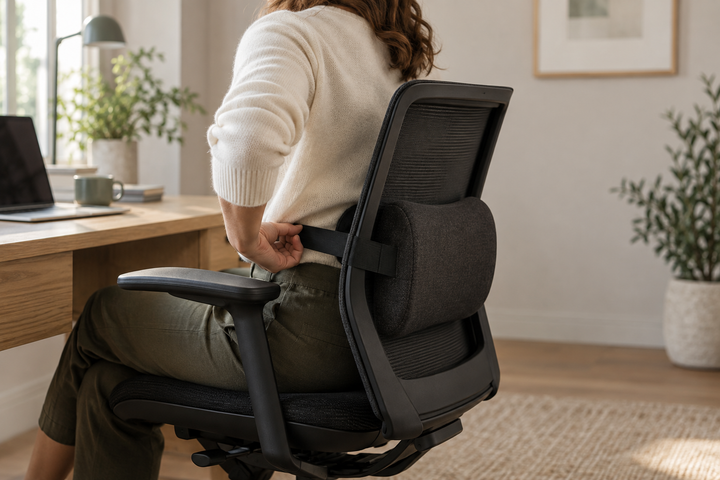
| There is a gap between your lower back and the backrest. | Backrest height, tilt and built-in lumbar adjustment. | A lumbar support cushion that fills the gap without pushing you forwards. |
| You perch on the front edge to reach the floor or desk. | Chair height, desk height, seat depth and foot support. | Fix the workstation relationship before adding thickness. |
| Both the seat surface and backrest feel unsupportive. | Whether the chair is fundamentally the wrong size. | Seat and back cushions may work together if enough usable space remains. |
If you use both, position the seat cushion first because it changes your height. Then reset your feet, desk and screen before positioning the back support cushion. Our guide to seat cushions versus lumbar support explains the difference in more detail.
What does research say about lumbar support?
Research supports cautious, specific conclusions rather than miracle claims. In a small study of 28 men with and without a history of lower-back pain, a lumbar support pillow produced small changes towards a more neutral lumbar posture and improved an objective pressure-based comfort measure. It did not produce a subjective change in comfort, and the authors said the long-term clinical relevance remained uncertain. You can read the study abstract on PubMed.
A separate randomised study of 30 healthy participants found lower discomfort and greater satisfaction during one hour of supported sitting than during unsupported sitting. Again, this was a short laboratory study, not proof that a back pillow treats sciatica. See the 2023 study on PubMed.
The practical conclusion is modest: support can change posture, muscle demand and perceived comfort, but fit and individual response matter.
How to test a seat cushion at your desk
- Start with the chair. Remove loose padding and set the chair at a working height that lets your shoulders relax.
- Place the cushion the correct way round. On a coccyx cushion, the opening normally faces the back so the tailbone is over the clear space. Follow the product instructions because shapes vary.
- Sit centrally. Keep your weight balanced rather than leaning away from symptoms for long periods.
- Recheck your feet. If the cushion raises your heels, adjust the chair or use a stable footrest where appropriate.
- Check behind your knees. You need comfortable clearance from the seat edge while still reaching the backrest.
- Reset the back support. Position it in the natural inward curve of your lower back, using gentle contact rather than maximum pressure.
- Test real work in short blocks. Notice whether you stay supported, slide forwards, feel the cushion bottom out or develop new symptoms.
The UK Health and Safety Executive says home workers should be able to achieve a comfortable, sustainable posture and that equipment should be suitable for the individual. Its home-working DSE guidance also treats the chair, desk and screen as one system rather than isolated products.
How to test a cushion in the car
A car seat has safety constraints that an office chair does not. Any cushion must leave you able to operate the pedals fully, see clearly, sit correctly against the head restraint and use the seat belt exactly as the vehicle manufacturer intends.
- Make sure the cushion lies flat and cannot slide under braking.
- Recheck the distance to the pedals and steering wheel.
- Confirm that the lap belt sits correctly across the pelvis, not the abdomen.
- Do not cover seat-belt buckles, side-airbag areas or seat controls.
- Test the setup while parked before driving.
- For long journeys, plan safe breaks instead of relying on a cushion to make uninterrupted sitting acceptable.
If an accessory interferes with safe control of the vehicle, do not use it. Check your vehicle handbook when in doubt.
Five signs the cushion is not helping
- You slide forwards. The contour, cover or chair angle may be unstable.
- Your feet lose support. Extra height has changed the chair-to-floor relationship.
- You cannot reach the backrest. The cushion may be too deep or may have changed your pelvic position.
- You feel the chair through the foam. The cushion may be too soft, too thin or bottoming out.
- Your symptoms become stronger or spread. Stop the test and seek appropriate advice rather than forcing an adjustment period.
For more troubleshooting, read why seat cushions flatten and our design, materials and evidence guide.
Movement still matters more than finding one “perfect” posture
The NHS advises people with sciatica not to sit or lie down for long periods and recommends carrying on with normal activities as much as possible. The HSE also warns that prolonged static sitting can be harmful and says a workstation should allow postural changes.
That does not mean following an identical timer regardless of your condition. It means treating a cushion as one part of a plan that includes position changes, suitable activity and professional guidance where needed. A comfortable setup should make movement easier, not encourage you to remain frozen for hours.
When should you seek medical help?
See a GP or contact an NHS musculoskeletal service if symptoms are worsening, have not improved after a few weeks of self-care or are stopping normal activities. The NHS advises calling 999 or going to A&E for symptoms including sciatica on both sides, severe or worsening weakness or numbness in both legs, numbness around the genitals or bottom, or new bladder or bowel control problems. Refer to the current NHS guidance for the full list.
Frequently asked questions
Can a memory foam cushion cure sciatica?
No. Memory foam can change the contact surface and chair fit, but it does not treat the cause of sciatic-nerve irritation or compression.
Can a seat cushion make sciatica feel worse?
Yes. A cushion that is too thick, unstable, excessively soft or poorly positioned can alter your posture and chair fit in an unhelpful way. Stop using it if symptoms clearly worsen.
Is a hard or soft cushion better?
Neither is universally best. You need enough contouring for comfort and enough support to avoid bottoming out. Body size, chair surface, foam density, thickness and personal preference all affect the result.
How long should I sit on a sciatica cushion?
A cushion is not a licence for uninterrupted sitting. Follow your clinician's advice, change position regularly and use symptoms as feedback. The NHS advises avoiding long periods of sitting or lying down.
Should I use a seat cushion and lumbar support together?
They can be used together when each solves a separate fit or comfort problem. Set the seat cushion first, then reassess foot support, seat depth and lumbar position.
The bottom line
A well-fitted cushion may improve everyday sitting comfort, but it should earn its place through a real-world fit test. Choose a stable shape, set up the whole chair again and stop if symptoms worsen. If you want to compare options, explore the TostiTosti memory foam seat cushion and TostiTosti back support cushion, both designed as comfort aids rather than medical treatments.
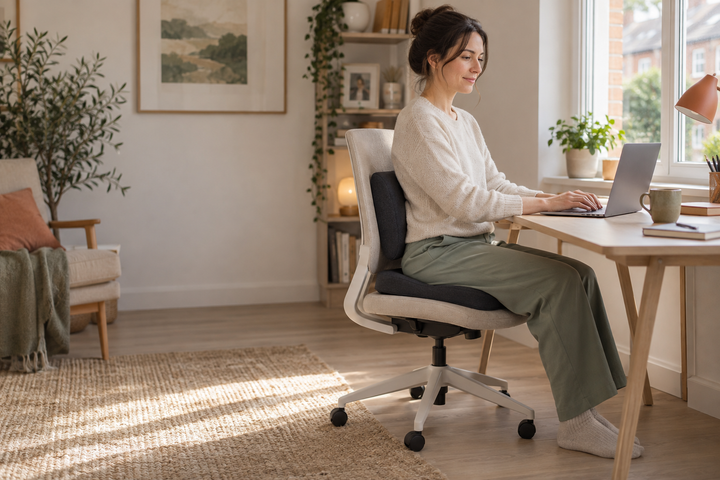
About this guide: Created for TostiTosti with AI assistance using the linked NHS and HSE guidance, the cited research abstracts and published TostiTosti product specifications. TostiTosti sells the cushions linked in this article. No clinical review, diagnosis or original product trial is claimed. The hero image is an AI-generated editorial image, not a customer photograph or medical fitting diagram.