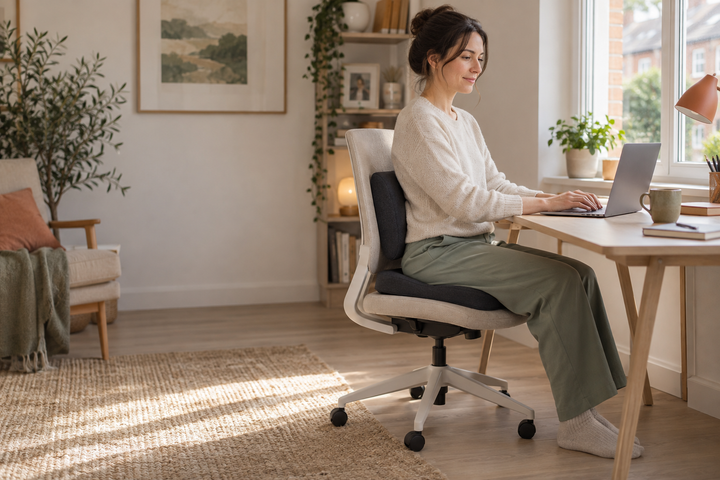
Office Chair Butt: Can a Seat Cushion Actually Help?
Share
By TostiTosti · Sources checked 20 September 2026
Quick answer: A seat cushion can change how comfortable your chair feels, but it does not exercise your glutes or prove that it prevents “office chair butt”. Treat that phrase as an informal internet label, not a diagnosis. If you sit at a desk for much of the day, look at movement, chair fit and any persistent symptoms as separate questions.
The phrase is catchy enough to make an ordinary workday sound alarming. You see a post about sitting “flattening” your glutes, look at your office chair, then wonder whether a memory foam cushion will prevent it.
For UK desk workers, the useful question is more specific: what can a cushion improve, and what still needs a change in your routine? Here is how to make that decision without buying into a body-shape promise.
What does “office chair butt” actually mean?
People use the phrase to describe different worries: changes in appearance, an inactive working day, stiffness, or discomfort around the sitting area. Those are not interchangeable. A social-media label cannot tell you why a particular symptom is happening.
UK insurer AXA Health discussed the trend in its 2026 report on sedentary work habits, referring to increased online interest. That helps explain why the question is circulating; it does not establish that everyone with a desk job has a medical condition.
The more dependable starting point is the NHS advice to be active and reduce prolonged sedentary time. You can apply that advice without diagnosing yourself from a photograph or comparing your body with someone else's.
What a memory foam seat cushion can and cannot do
A cushion changes the surface between your body and the chair. Shape, size and material affect how it feels; whether it suits you also depends on the chair underneath it. A rear cut-out is a design feature to assess for fit, not evidence that the cushion treats a medical condition.
It helps to separate three different goals:
| Your goal | What to consider | The limit |
|---|---|---|
| Make an uncomfortable sitting surface more comfortable. | A suitable seat cushion, seat adjustment or a better-fitting chair. | An accessory cannot correct every chair-fit problem. |
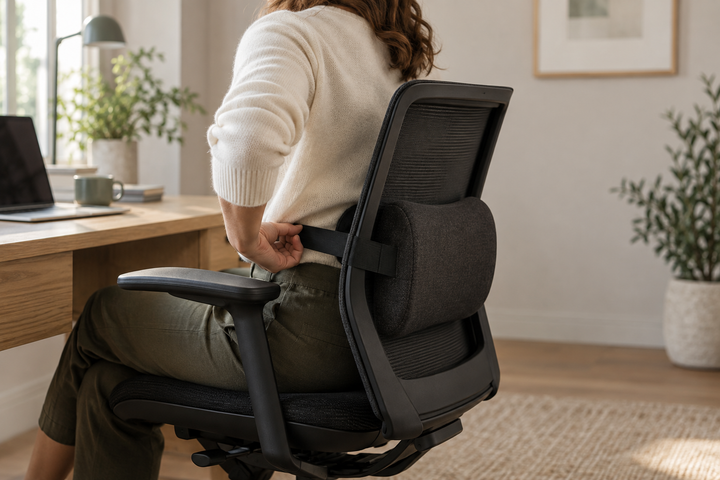
| Support a gap between your back and the backrest. | The chair's lumbar adjustment or a compatible back cushion. | Extra thickness can push you forwards or reduce usable seat depth. |
| Spend less of the day inactive. | Changes of activity, movement breaks and an appropriate exercise routine. | Neither seat nor back padding provides muscle-strengthening exercise. |
No evidence is presented here that a TostiTosti cushion changes glute shape, increases muscle strength or prevents a condition described online as “office chair butt”. The product decision is about sitting comfort and fit.
If the distinction between accessories is unclear, our seat cushion versus lumbar support guide explains where each belongs.
A practical routine for a day of desk work
Build the routine around work events you already notice. A useful reminder is one that actually changes what you do, rather than becoming another notification to dismiss.
Before the first work block: check the setup
Check your chair, feet and keyboard position before opening your inbox. Recheck after adding a cushion, because your sitting height may change. For a shared desk, repeat the check whenever the chair or desk changes; yesterday's settings may belong to somebody else.
Between work blocks: change the activity
HSE's DSE break guidance favours short, frequent breaks or changes of activity. It gives 5–10 minutes each hour as an example rather than a universal legal timetable. Use suitable opportunities to leave the screen, move around or change position.
For example, finish a call and walk to refill your water, or take a short non-screen task between longer pieces of work. If standing or walking is not suitable for you, choose changes of position or activity that match your abilities and any professional advice you follow.
Across the week: include activity beyond the chair
The NHS guidelines for adults aged 19–64 include strength work for major muscle groups on at least two days a week, alongside aerobic activity and breaking up long periods of inactivity. The guidance recommends speaking to a GP first if you have not exercised for some time or have medical concerns.
That is different from following a viral challenge of a fixed number of squats every hour. Your routine should suit your health, capacity and circumstances. A cushion can be part of the environment in which you work; it does not take the place of activity.
When is a seat cushion worth considering?
Consider one when the chair broadly fits and you want to change the feel of the sitting surface. Before buying, check these practical points:
- Available space: the cushion should fit on the usable seat without folding against the armrests or hanging over an edge.
- Added height: reassess foot support, desk clearance and keyboard reach while sitting on it.
- Position: follow the maker's orientation instructions instead of guessing from a photograph.
- Stability: check it stays put during ordinary changes of position.
- Care: read the instructions for the cover and foam separately.
The TostiTosti Seat Cushion measures approximately 44.5 × 36.8 × 6.4 cm and has a contoured memory-foam body, rear U-shaped cut-out, removable mesh cover and non-slip base. Position the cut-out at the rear and the base down as instructed. Its listed thickness is not a prediction of how high you will sit once it compresses.
Read the office-chair seat cushion guide before choosing. If your concern is mainly lower-back support, compare the chair's adjustments with a back support cushion instead of assuming a seat pad will fill that gap.
When the issue needs more than a cushion
Persistent pain, new weakness or numbness deserves appropriate health advice. The NHS back-pain page sets out routine, urgent and emergency symptoms. Back pain with new bladder or bowel changes, loss of feeling around the genitals or anus, or symptoms in both legs needs emergency assessment. Do not use an internet trend to explain those symptoms away.
Office chair butt and cushion questions
Can a seat cushion stop my glutes from becoming weaker?
A cushion does not train the muscles. Choose it for an appropriate comfort or fit purpose, and consider physical activity separately.
Is a standing desk the complete answer?
It gives you another working position, but standing still is not the same as being physically active. The useful aim is a workable variety of positions and activities, not replacing one fixed posture with another.
Do I need the thickest memory foam cushion?
No. Extra thickness changes your relationship with the desk and floor. Fit, stability and comfort matter more than choosing the largest-looking cushion.
Can I stay seated longer if a cushion feels comfortable?
Comfort is welcome, but keep planned breaks and changes of activity. Feeling comfortable does not turn a long inactive period into exercise.
About this guide: Created for TostiTosti with AI assistance using linked NHS and HSE guidance and published product specifications. TostiTosti sells the cushions linked here. This article provides general information; it is not a diagnosis, individual exercise prescription or clinically reviewed treatment guide. No original product trial is claimed. The hero image is an AI-generated editorial illustration.