Memory Foam vs Gel Seat Cushions: Which Is Better for Long Sitting?
Share
Quick answer: Memory foam usually offers closer contouring and stable support, while gel can feel cooler and distribute pressure differently. A hybrid cushion combines both ideas. The best choice depends on your chair, body shape, preferred firmness and how long you sit—not on one material being universally "best".
One of the most repeated questions in online chair and ergonomics communities is why two cushions that both look soft can feel completely different after a full working day. The answer is usually found in density, thickness, shape and heat management rather than the material label alone.
Memory foam, gel and hybrid cushions at a glance
| Type | Typical feel | Useful for | Watch for |
|---|---|---|---|
| Memory foam | Contoured and supportive | Stable everyday desk use | Very soft foam may bottom out |
| Gel | Springy or floating | Pressure distribution and airflow designs | Weight and a less contoured feel |
| Hybrid | Foam support with a gel layer | Balanced cushioning | Extra height and variable quality |
Does firmer memory foam give better support?
Firmness and support are related, but they are not identical. A cushion that is too soft may compress until you can feel the chair beneath it. One that is too firm may create new pressure points. High-density memory foam is designed to compress gradually and recover its shape, giving the pelvis a stable surface without feeling like a hard board.
Judge a cushion after at least 20 to 30 minutes, not only during the first sit. Your feet should remain supported, your hips should feel level and the front edge should not press into the backs of your knees.
Which cushion is cooler?
Open mesh, air channels and a breathable removable cover often matter more than a thin gel label. All materials can warm up during long, uninterrupted sitting. Room temperature, clothing and the chair beneath the cushion also affect heat.
If you tend to sit warm, look for a ventilated cover, avoid waterproof layers for ordinary desk use, and stand up regularly. See our guide to keeping a seat cushion cooler.
Will a thicker cushion be more comfortable?
Not always. Extra height changes your relationship with the desk, armrests, backrest and floor. A thick cushion can be useful on a low or worn seat, but it can also leave your feet unsupported or reduce the usable height of the backrest. Recheck your chair settings after adding any cushion.
How to choose in five steps
- Identify where you feel pressure: tailbone, thighs, hips or lower back.
- Measure the usable chair seat so the cushion will sit flat.
- Choose enough firmness to avoid bottoming out.
- Check that the cover is breathable, removable and washable.
- Use a return or comfort period to test it during your real routine.
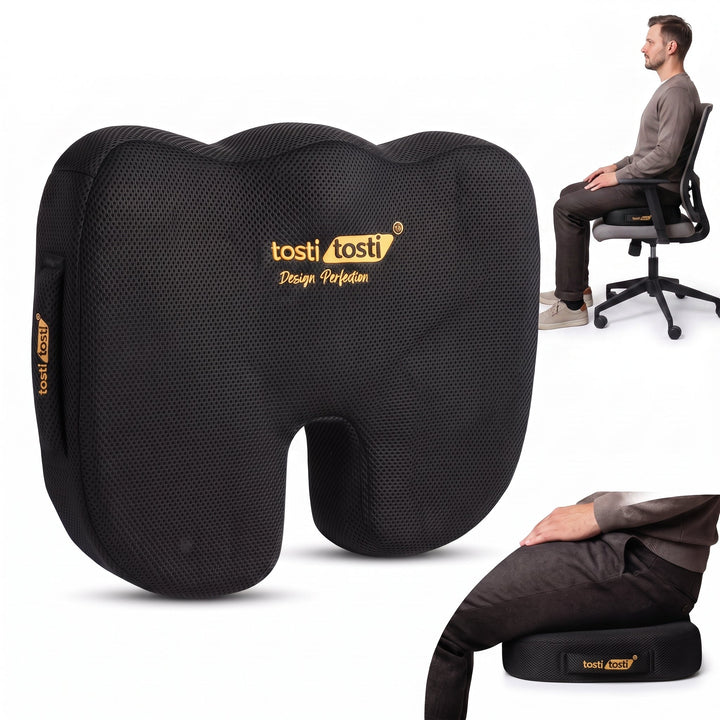
The TostiTosti ergonomic seat cushion uses high-density charcoal-infused memory foam, a breathable removable cover and an anti-slip base for stable everyday use. It is designed as a practical chair upgrade rather than a substitute for movement or professional assessment.
Frequently asked questions
Is gel better than memory foam for tailbone pressure?
Neither material guarantees relief. Shape and pressure distribution matter. A coccyx cut-out can reduce direct contact around the tailbone, while stable foam or gel supports the surrounding area.
How do I know if a cushion is bottoming out?
If the cushion feels comfortable initially but you can soon feel the hard chair through it, or it stays heavily compressed, it may be too soft, thin or worn for your needs.
Can I use a seat cushion every day?
Yes, if it keeps you stable and your feet, knees and back remain comfortably positioned. Change posture and take regular movement breaks. Persistent or worsening pain should be discussed with a qualified healthcare professional.
The takeaway
Choose by fit, firmness, shape and ventilation—not by material buzzwords. Memory foam suits people who value contouring and stability; gel may appeal to those who prefer a more responsive feel; and hybrids can offer a middle ground.
For more on cushion materials, contouring, realistic benefits and the limits of the evidence, read Back Support Cushions: Design, Materials and Evidence.